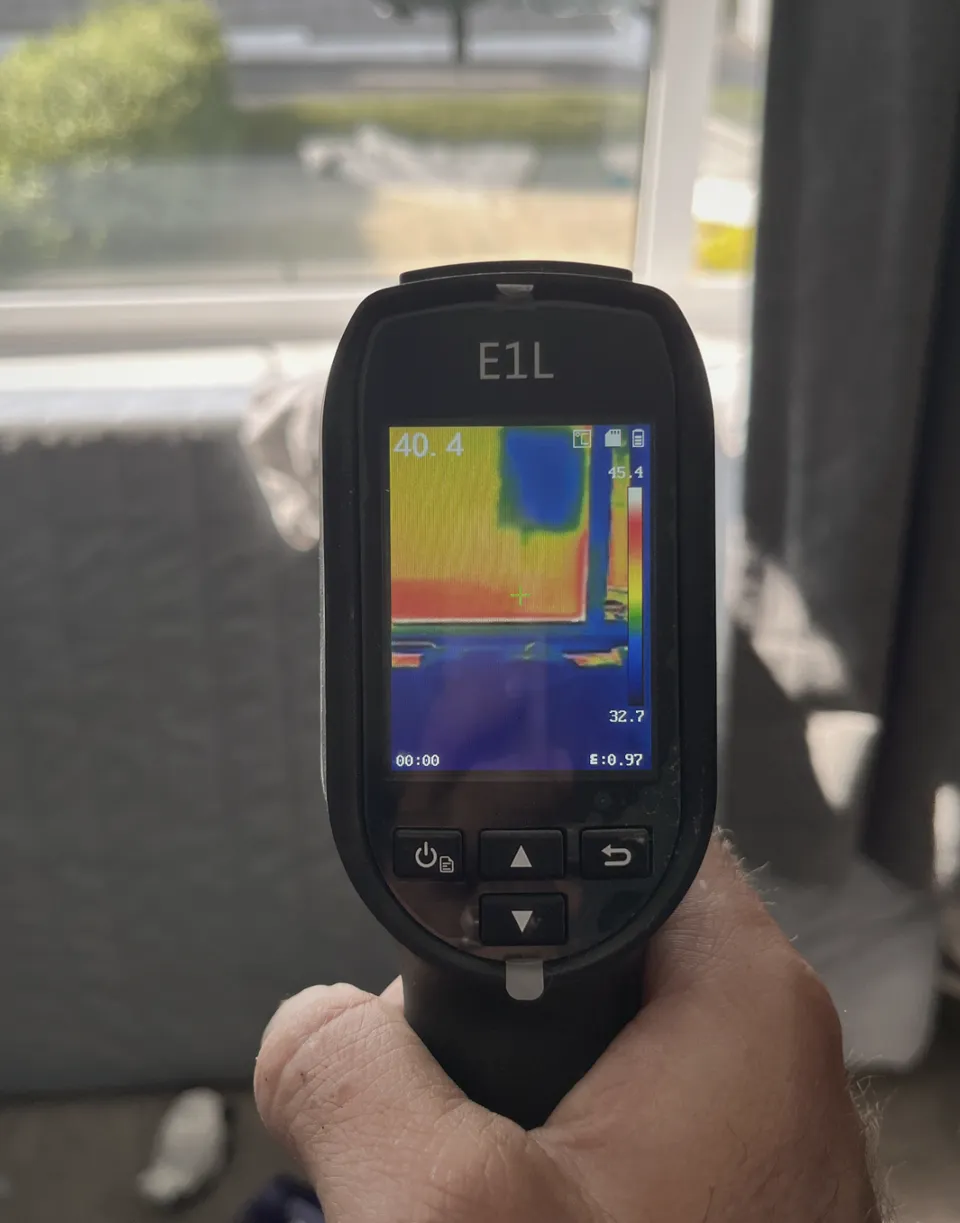
A thermal imaging camera turns an invisible problem, heat entering or escaping through a wall, a window, or a badly insulated loft hatch, into a picture anyone can read. Cold spots show up as deep blue or purple, warm spots as orange and yellow, and suddenly the vague sense that “the back bedroom is always roasting” becomes a specific window that’s working like a radiator.
The good news for anyone in Bristol or Somerset: there’s no need to buy one. Several local schemes will lend a camera out for free, and a national one from Octopus Energy is worth keeping an eye on too.
1. Bristol: Share Bristol’s Library of Things
Bristol’s wireless thermal imaging cameras connect to a mobile phone via bluetooth and the FLIR ONE app to help detect heat loss in the home, and they’ve been funded through Retrofit West’s community programme, a free and impartial local retrofit advice service. They’re available to borrow through Share Bristol’s Library of Things (things.sharebristol.org.uk), the same service that lends out tools, camping kit, and other household items rather than letting them sit unused in a cupboard.
2. Somerset: available at your local library
Somerset Libraries run one of the best-established schemes in the country. The camera connects to a smartphone or tablet and is available for Somerset library members to borrow for three days, free to request from the local library. The scheme has been running long enough to have loaned devices out to more than 100 residents and picked up a regional library award for it. Just call in and ask a member of staff to reserve one.
3. North Somerset: a week’s loan, but there’s a waitlist
North Somerset Council runs a similar scheme through its library network, with a longer loan period. Twenty-five thermal imaging cameras are available to borrow for free from any North Somerset library, including mobile libraries, for one week, and to borrow one you need to be a North Somerset library member living in the area. It’s been popular enough that the scheme has previously had to serve customers from a waiting list before accepting new requests when it reopens each year, so it’s worth getting your name down early if you’re just outside the Bristol boundary.
4. Bath: a shorter loan through the Library of Things
For anyone further East, Bath’s Library of Things also lends a Flir CX thermal imaging camera, boxed with a carry case and lanyard, for a maximum two-day loan, with the request to recharge it before returning.
In practice
Loan periods vary from two days to a week. Book a dry, clear evening rather than a wet one: thermal cameras read surface temperature differences best when there’s a decent gap between indoor and outdoor temperature, which usually means early morning or evening rather than the middle of a hot afternoon.
5. Octopus Energy: free for customers, when the scheme is open
Octopus Energy has been running its own FLIR camera loan scheme for several years, entirely free to its energy customers. So far 8,000 of their customers have borrowed one of their cameras, and a survey found 92% of people found the camera very useful in helping spot heat loss, with 96% saying they’d recommend using one to a friend or family member. The scheme runs on a seasonal basis and demand regularly outstrips supply: the scheme for winter 2025/26 has now closed, with the 2026/27 waiting list expected to open in the new year. It’s worth bookmarking the Octopus thermal camera page and checking back, since they only have a couple of hundred cameras to lend out each winter.
Note that this scheme is exclusive to Octopus customers, and you can only loan a camera once, to give as many customers as possible the chance, so it’s not a repeatable resource in the way the library schemes are.
Why it’s worth the trip to the library
A thermal camera won’t fix anything on its own, but it turns guesswork into a shortlist. Whether that’s confirming a dark-painted wall really is running hotter than the pale one next door, checking whether an external blind is actually cutting solar gain at the glass, or simply finding the gap around a letterbox that’s been letting heat out all winter, the camera does in an afternoon what would otherwise take a professional survey to establish.
Given that most of these schemes are free, and running one costs nothing but a library card or an Octopus account, it’s one of the easiest first steps before spending money on shutters, render, or insulation, because it tells you exactly where that money will do the most good.