Some of the clearest evidence for how shading works doesn’t need a lab. It needs a roll of kitchen foil, a bit of tape, and about ten minutes on a sunny evening. We tried it on our own west-facing window, and the result was obvious enough to feel almost unfair: a 12°C difference from one small square of foil.
The setup
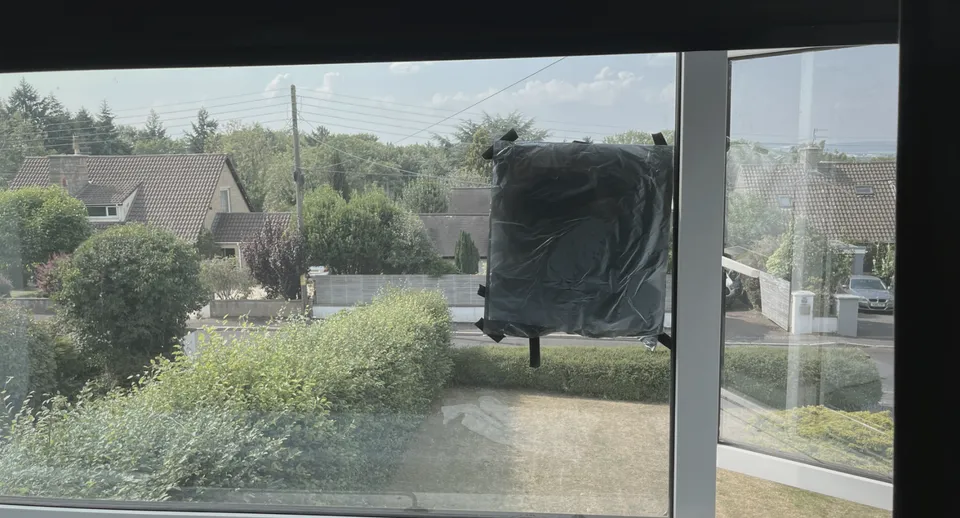
We took a small square of ordinary kitchen foil, shiny side out, and stuck it to the outside of a large west-facing window. West-facing windows don’t peak at midday, they peak in the early evening once the sun has swung round, so we timed the test for around 7:30pm, which our solar gain calculator flags as roughly the peak heat gain window for a west-facing elevation in July.
In practice
If you want to time your own version of this test, plug your region and wall orientation into our calculator first. A south wall peaks around midday, a west wall peaks in the early evening, and testing at the wrong time will understate the effect.
[image: thermal camera photo of the test wall showing the foil square in place, standard visible-light shot before switching to thermal]
What we measured
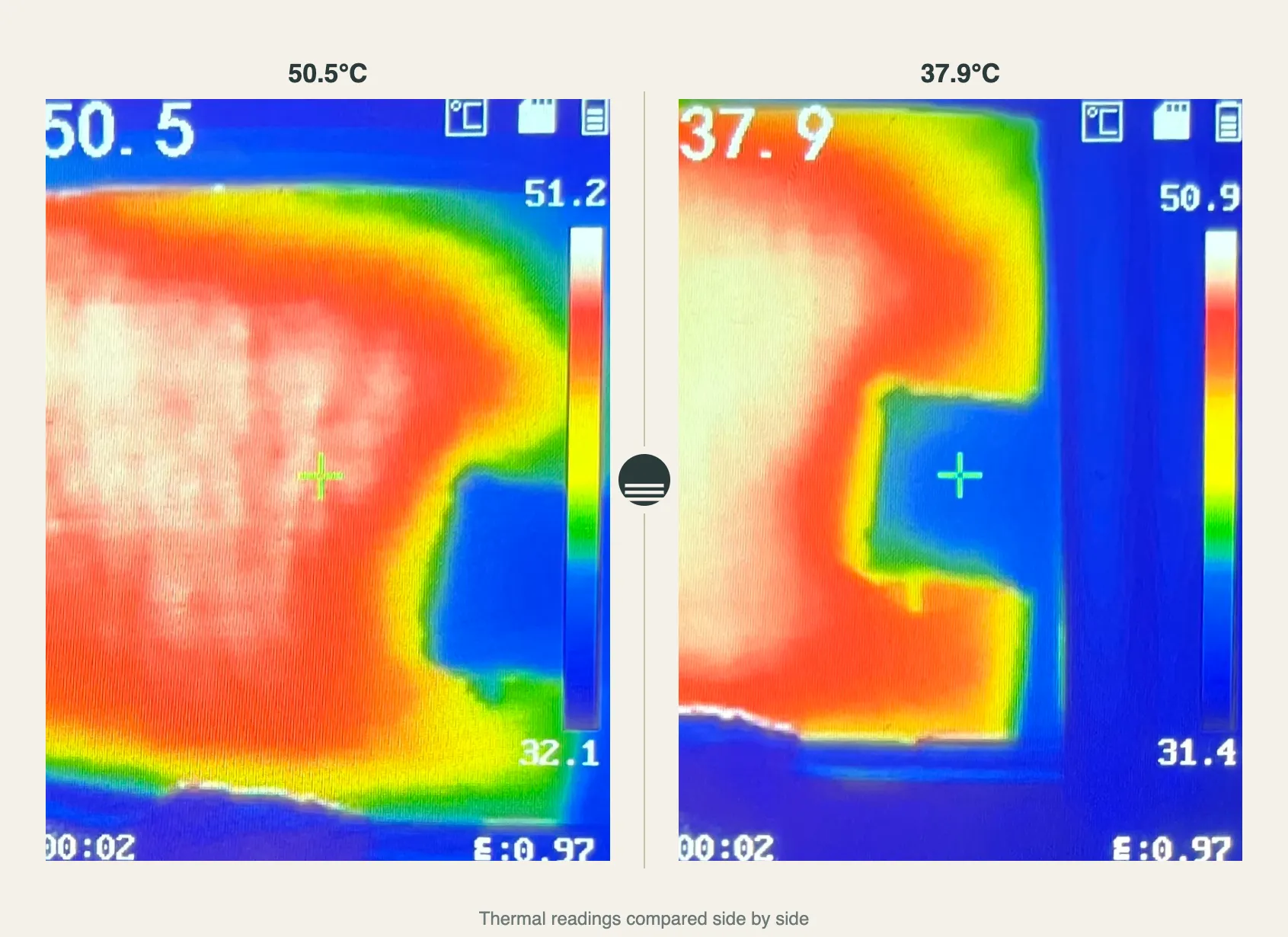
At 7:30pm, the plain window read approximately 50°C. The patch covered by foil, sitting right next to it in identical sun, read approximately 38°C. Same window, same angle, same few minutes of sunlight, a 12°C gap created by nothing more than a reflective surface stopping heat before it could be absorbed.
Why foil, specifically
Kitchen foil is about as close to a perfect reflector as you’ll find lying around the house. Painted render might reflect 70-80% of incoming sunlight if it’s a good white, but foil reflects the vast majority of it, closer to how a mirror behaves than a painted wall. That’s exactly why the gap in our test was 12°C rather than a couple of degrees. It’s not a subtle nudge, it’s the same principle turned up to make the point unmissable.
What it actually demonstrates
Nobody’s suggesting you foil-wrap your windows. But the experiment proves the exact mechanism behind every piece of external shading we write about on this site: stop the sun before it reaches a solid surface, and that surface simply doesn’t heat up in the first place. A reflective roof coating, a pale render, an external blind mounted clear of the glass, they’re all doing a gentler, more permanent version of what that scrap of foil did in ten minutes flat. If a few square inches of foil can hold a wall 12°C cooler, it’s easier to believe that a well-shaded window or a pale-rendered façade is doing real, measurable work all summer long.
Try it yourself
- A4-sized (or smaller) piece of ordinary kitchen foil, shiny side facing out
- Masking tape or painter’s tape, something that won’t damage the window on removal
- A west or south-facing window in direct sun
- A thermal camera if you have one, or borrowed from your local library, or even the back of your hand a few minutes after the sun moves off the patch
Time it against your wall’s actual peak using the calculator, give the foil a few minutes in direct sun, then compare it to a bare patch right beside it. On our window the difference was 12°C. We’d be curious what you get on yours.