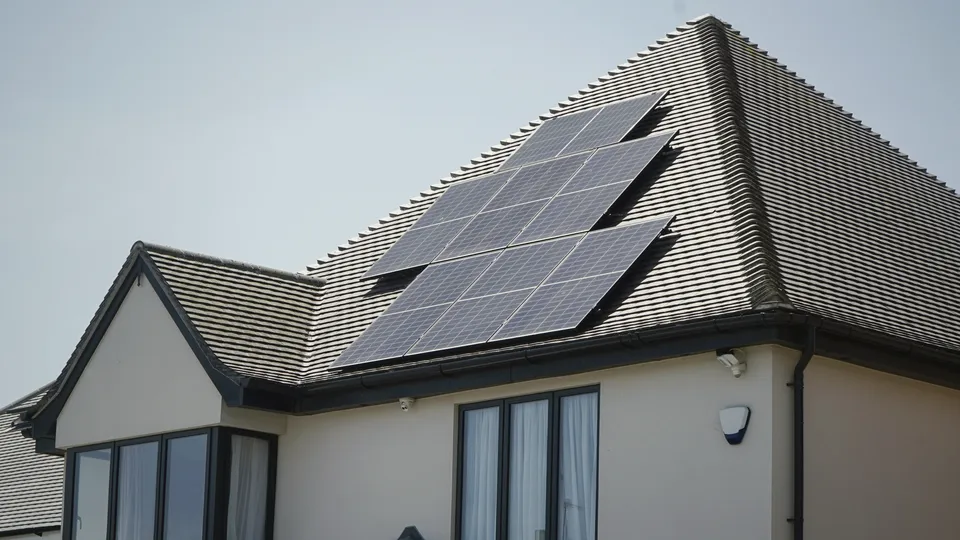
Ask most people what solar panels are for and the answer is electricity, and nothing else. That’s fair; it’s the whole reason people fit them. But there’s a second effect that rarely makes it into the sales conversation: a panel sitting a few centimetres above the roof is also standing between the sun and your tiles, and that changes how hot the loft below actually gets.
It’s a genuinely useful side effect for anyone who’s ever climbed into their loft on a July afternoon and wondered why it feels like an oven.
1. The panel takes the beating so the roof doesn’t have to
A standard rooftop array is mounted on rails with a small air gap beneath it, rather than laid flat against the tiles. That gap matters: instead of sunlight hitting the roof directly, it hits the panel first, where some of the energy is converted to electricity and the rest is either reflected or re-radiated, with the moving air underneath carrying part of it away before it ever reaches the roof deck.
2. The effect is measurable, not marginal
Researchers at UC San Diego used thermal imaging to compare shaded and exposed sections of the same roof and found that a building’s ceiling was 5 degrees Fahrenheit cooler under solar panels than under an exposed roof, with the panels reducing the amount of heat reaching the roof by about 38 percent. That’s not a fringe result either; separate modelling work in a hot summer climate found the peak temperature of the roof is reduced by 22.9°C under a PV array, with daily heat gain cut dramatically as a result.
In practice
A loft that would otherwise sit well above outdoor air temperature on a sunny afternoon runs noticeably cooler under a panelled section of roof than an exposed one, purely because the array is intercepting the sun before it reaches the tiles.
3. Less heat in the loft means less work for everything below it
A hot loft doesn’t stay in the loft. Heat conducts down through the ceiling insulation into the rooms below, which is why top-floor bedrooms are so often the warmest part of a house in summer. Less heat arriving at the roof deck means less heat pressing down through that insulation layer, and one modelling study linked a comparable rooftop temperature reduction to a 20% decrease in air conditioning energy consumption in the rooms directly below.
4. It’s a genuine bonus, not the main event
None of this makes solar panels a shading product in their own right. The gap above the tiles is a few centimetres, the coverage is usually one roof slope rather than the whole building, and the effect is strongest directly under the array rather than anywhere else in the house. It won’t replace external blinds on south-facing windows or reflective render on a dark wall.
But for a roof that already gets full sun for most of the day, it’s a welcome bit of double duty: the same array quietly generating electricity is also taking the worst of the afternoon heat before it gets anywhere near the loft insulation. Worth knowing if solar is already on the list of jobs for the house, and one more reason a hot, south-facing roof slope is often the best place to put it.